Ceramics at DKDS, Bornholm

Ceramics

Objective
The ceramics programme aims to give the student knowledge of and skills in technical, craft and design disciplines, including material studies, firing techniques, and about kiln-building as well as aesthetic and artistic understanding.
Through the process, students learn to define and address a technical, theoretic or form problem step by step from research, idea development and objectives to a finished ceramic product.

General features

First and second semester: During the first year of study, the main emphasis is on basic education in techniques and materials in order to ensure a firm basis in craftsmanship. In addition to the basic technical and craft disciplines, students work with the production and handling of various clay types, clay history, glazing techniques and glazing samples, practical and theoretical glaze chemistry, including the history and materials of glazing and various kiln-building techniques.

Third and fourth semester: During the second year of study, students expand and develop their technical and craft qualifications. Here the main programme emphasis is on the artistic and design background and on development and aesthetic sense. Students must be able to handle a project assignment through creativity, innovation and experimentation.
Fifth and sixth semester: During the third year of study, students expand their personal artistic and design background to develop an independent, professional attitude. During the third year of study, students mostly engage in independent, individual activities.

Course content

Material studies
Raw materials processing, production of clay types, raku, earthenware, stoneware and porcelain.
Glaze chemistry, glaze production in theory and practice, principles for kiln-firing, firing techniques and fireproof materials, and the use of tools and instruments.

Design principles
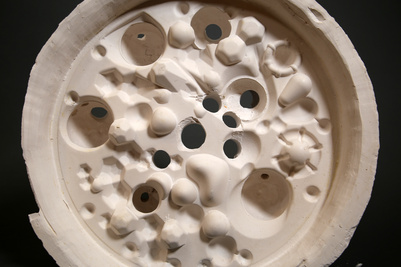
Throwing, slab technique, press-moulding,  plaster work , casting techniques, jiggering, jolleying, and the cultural history of ceramics.

Product areas
Applied art, one-offs, product development, design.

Approach

The programme structure is based on project modules. During the first year of study and until the third-semester mid-way project, students work on clearly defined assignments to ensure that they acquire the necessary basic knowledge. As the programme progresses, students are gradually required to work more independently with self-articulated projects, and the teachers come to act as initiators, guides and consultants. A proposal for a self-defined project must be approved by the head of department for the study line before the project is initiated. At the completion of a project, in addition to the project output itself the student gives an oral presentation on the creative process. This oral presentation is supplemented with a digital presentation that supports the project and the oral presentation with text, images and drafts. The project is assessed by internal examination on a pass/no-pass basis.

  • Home
  • Sitemap
  • Tip a Friend
  • Speech
  • Print page
  • Bigger text
  • Smaller text
  • Contact

Keramik-specialet Danmarks Designskole, Bornholm